


How Can Buyers Review Custom Options With relayfactory?
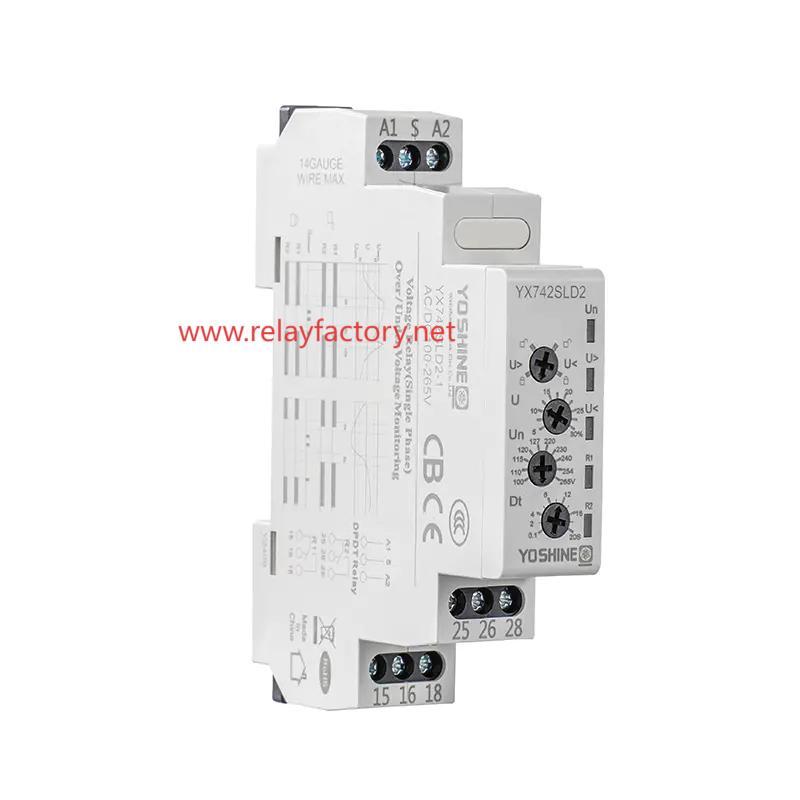
Time Relay Producer selection should begin with a clear understanding of the questions that matter to your project. Buyers need to discuss more than unit prices and catalogue models. Electrical compatibility, operating sequences, installation conditions, customization, inspection arrangements, and order coordination all influence whether a product fits the intended equipment. Preparing these questions before contacting a manufacturer can make technical discussions more productive and help purchasing teams compare proposals on a consistent basis.
Which Operating Sequence Does Your Equipment Require?
Start by explaining what the control circuit needs to do. Does the equipment require a delayed start, delayed stop, interval operation, repeated cycling, or a sequence involving several timing stages? Describing the actual operating process gives the manufacturer a clearer basis for recommending a suitable model.
Buyers should also explain when timing begins, what event ends the cycle, and whether the output needs to change state after the preset period. These details are more useful than simply requesting a device with multiple functions.
For projects involving machinery, pumps, generators, or lighting systems, provide a short description of the complete control sequence. A wiring diagram or existing component reference can make this discussion easier.
What Electrical Specifications Should Be Confirmed?
Ask which supply voltage options are available and whether the proposed configuration matches the control cabinet. The required AC or DC supply, rated frequency where applicable, and connection arrangement should be confirmed against the equipment documentation.
Output contacts also deserve careful attention. Buyers should identify the required contact arrangement, such as normally open, normally closed, or changeover contacts, and explain the load being controlled. Contact ratings need to be considered alongside the actual operating conditions, including starting current where relevant.
It is also useful to request the technical datasheet and wiring diagram for the exact model under consideration. These documents allow purchasing staff and electrical engineers to check the same information before approving an order.
How Should Buyers Compare Timing Settings?
The available timing range should correspond with the operating cycle of the equipment. Buyers should state the required minimum and maximum delay rather than relying on a general description such as short delay or long delay.
Ask how the setting is adjusted and whether the available scale or display makes the required value practical to select. For equipment that needs frequent commissioning changes, adjustment access and readable markings may be important.
Another useful question concerns repeatability. Buyers can ask which timing specifications apply to the selected model and under what operating conditions they are measured. This helps avoid choosing a product based only on its advertised range without reviewing the actual application requirements.
Which Installation Details Need to Be Checked?
A product that matches the electrical requirements must also fit the intended installation space. Confirm the mounting method, overall dimensions, terminal positions, wiring access, and available clearance inside the control cabinet.
DIN rail installation may be suitable for some control panels, while other projects may require a different arrangement. Buyers should provide cabinet drawings or photographs when space is limited.
Environmental conditions should also be discussed. Temperature, humidity, vibration, dust exposure, and ventilation can affect the selection of electrical components. Providing these details helps the manufacturer clarify applicable operating conditions and installation recommendations.
What Customization Options Can the Manufacturer Discuss?
Standard catalogue models may cover many applications, but certain projects have specific requirements. Ask whether adjustments to timing functions, voltage options, contact arrangements, housing details, terminal layouts, or product identification can be considered.
For OEM projects, prepare a written specification rather than sending requirements through several separate messages. Include drawings, reference samples, estimated order quantities, packaging preferences, and any market-specific documentation requirements.
The manufacturer should clarify which changes are available within existing product designs and which may require additional engineering evaluation. Buyers should also confirm whether a sample can be arranged for installation and functional checks before a larger order is approved.
How Are Product Inspection and Order Approval Managed?
Before placing an order, ask what checks are performed during production and before shipment. Depending on the model, relevant checks may include supply voltage verification, timing function operation, contact switching, appearance, terminal condition, and label accuracy.
Buyers can request applicable inspection records or test information for review. They should also agree on the model number, approved specifications, sample acceptance criteria, and procedures for handling any changes.
For repeat purchases, keeping approved drawings and product records helps both parties maintain consistent order information. This is particularly useful for distributors and equipment manufacturers managing several product variants.
What Should Be Agreed Before Production Starts?
Commercial details are part of the purchasing decision. Confirm the order quantity, production schedule, payment conditions, packaging method, shipping arrangement, and documents included with the shipment.
If the order contains multiple configurations, prepare a model list showing the required quantity and specifications for each version. This reduces the chance of confusion during order confirmation and delivery preparation.
Buyers should also ask how technical questions will be handled after delivery. Clear communication about installation guidance, replacement requirements, and future specification changes can support ongoing cooperation.A useful supplier discussion should leave both parties with the same understanding of the product, application, and order scope. relayfactory offers different timing control products, including multifunction and on-delay or off-delay configurations, with OEM discussions available for customer requirements. Buyers can review the product range and submit their project specifications at https://www.relayfactory.net/ to discuss suitable arrangements for their electrical control applications.

 English
 French
 Spanish
 Portuguese
 Deutsch
 Turkish
 Dutch
 Italiano
 Russian
 Romaian
 Portuguese (Brazil)
 Greek
