


Germany’s Water and Wastewater Pump Sector Advances Through Infrastructure Renewal
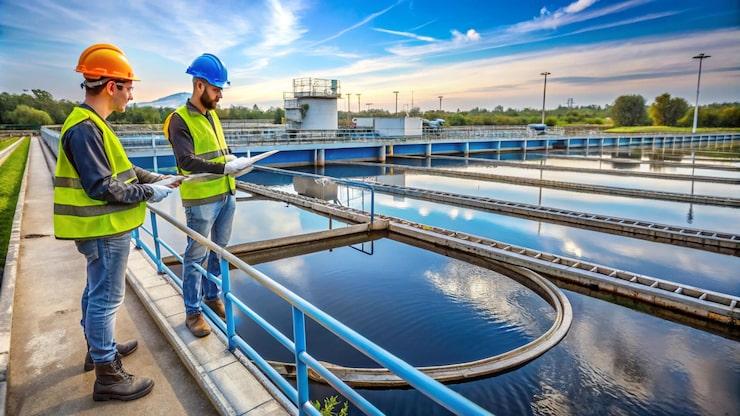
Germany’s water and wastewater infrastructure is entering an important modernization phase as aging networks, stricter treatment requirements, rising energy costs, and growing emphasis on water resilience influence investment decisions. Pumping systems remain essential across municipal water distribution, sewage treatment, sludge management, stormwater control, and industrial water processes, making equipment efficiency and reliability increasingly important.
According to Markntel Advisor, the Germany water and wastewater pump sector was valued at around USD 774 million in 2025 and is projected to grow from USD 779 million in 2026 to USD 975 million by 2032, registering a CAGR of 3.8% during 2026–2032. The assessment identifies regulatory upgrades, infrastructure refurbishment, smart pumping systems, and demand for energy-efficient equipment as important factors shaping the sector.
Revised Wastewater Rules Increase Modernization Requirements
The revision of the EU Urban Wastewater Treatment Directive is creating additional requirements for German wastewater-treatment infrastructure. The updated framework introduces tighter treatment standards, expanded coverage, enhanced nutrient removal, and phased requirements for removing micropollutants such as pharmaceutical residues and microplastics.
Germany operates more than 9,000 public wastewater treatment plants, according to the study, with many facilities requiring technological retrofits to meet the revised requirements. These upgrades can involve biological treatment, tertiary filtration, sludge management, and advanced treatment processes, creating demand for centrifugal pumps, submersible wastewater pumps, sludge-handling systems, and precision dosing equipment.
The European Commission’s wastewater policy framework provides the broader regulatory context for these changes, including requirements related to treatment performance, resource recovery, and environmental protection.
Centrifugal Pumps Maintain Their Leading Position
Centrifugal pumps represented the leading pump type in Germany in 2025. Their high operational efficiency, ability to handle large flow rates, and suitability for continuous-duty applications support their use across water distribution, wastewater treatment, and flood-control systems.
Their compatibility with variable-frequency drives also makes centrifugal pumps relevant to utilities seeking greater control over energy consumption. Lower maintenance requirements and established use across municipal infrastructure further support their position.
The study indicates that centrifugal pumps are expected to retain their leadership through the forecast period as utilities continue replacing aging equipment and adopting more energy-efficient pumping technologies.
Municipal Infrastructure Remains the Largest End-User Segment
Municipal water and wastewater applications accounted for 54.59% of the sector in 2025, according to the assessment. Sustained public investment in aging water distribution and sewage infrastructure, regulatory compliance, treatment-plant modernization, and smart municipal networks supports continued demand.
Many German wastewater systems were installed several decades ago and are now entering refurbishment cycles. Replacement requirements therefore represent an important source of demand, particularly for pumps operating in sewage networks and treatment facilities.
Flood management and stormwater control are also becoming increasingly important as municipalities adapt infrastructure to changing precipitation patterns. Pumping capacity and system redundancy can help utilities manage sudden increases in water volumes and reduce the risk of service disruptions.
Industrial Water and Wastewater Demand Gains Momentum
Although municipal applications maintain the largest share, the industrial water and wastewater segment is projected to be the fastest-growing end-user category, with a CAGR of 4.21% during 2026–2032.
Germany’s industrial base includes chemicals, pharmaceuticals, food processing, manufacturing, and other water-intensive activities. These industries require reliable pumping systems for process water, cooling, wastewater treatment, sludge handling, and water-recycling applications.
Stricter effluent requirements and greater adoption of closed-loop water systems are also encouraging industrial operators to improve treatment and reuse infrastructure. Pumps capable of supporting these systems can become increasingly important as manufacturers seek to reduce freshwater consumption and wastewater discharge.
Digitalization Supports Smarter Pump Management
Digitalization is changing how German utilities and industrial operators manage pumping assets. IoT-enabled systems can collect information on vibration, pressure, temperature, flow, and other operating parameters, giving operators greater visibility into equipment performance.
Predictive-maintenance platforms can use this data to identify abnormal operating conditions and potential failures before they cause significant downtime. Digital twins and AI-based analytics can further support performance optimization and lifecycle management.
These developments are consistent with Germany’s wider Industry 4.0 environment, where automation, connectivity, and data-driven decision-making are increasingly integrated into industrial infrastructure.
Energy Efficiency Becomes a Major Procurement Consideration
Energy consumption is particularly important for wastewater facilities because pumping systems can operate continuously and represent a significant portion of operational electricity use. Rising energy costs are consequently influencing equipment-selection decisions and encouraging utilities to consider lifecycle efficiency.
Variable-frequency drives can adjust pump speed according to changing flow requirements, while high-efficiency motors and optimized hydraulic designs can reduce electricity consumption. Smart controls can also help prevent unnecessary pumping and improve system coordination.
However, higher-efficiency equipment may require greater upfront investment. Smaller municipalities with constrained budgets may therefore delay replacement decisions or continue repairing existing systems rather than immediately adopting new equipment.
Water Reuse Creates New Pumping Requirements
Water reuse and circular water management are emerging as additional areas of opportunity. Regional groundwater stress and prolonged drought conditions are increasing attention toward tertiary and advanced wastewater treatment, closed-loop industrial systems, and more efficient freshwater use.
Advanced treatment processes such as activated-carbon filtration, ozonation, and membrane systems require specialized pumping equipment for water intake, treatment, circulation, and transfer. Industrial facilities implementing water-recycling systems can therefore create additional demand for high-pressure and energy-efficient pumps.
The German Federal Environment Agency’s water resources information highlights the importance of protecting water resources and adapting water management to changing environmental pressures.
Capital Costs Can Slow Replacement Cycles
High energy prices are not the only financial challenge facing the sector. Retrofitting legacy infrastructure can require substantial capital because pump replacement may need to be accompanied by electrical upgrades, control systems, pipeline modifications, and civil works.
Public procurement procedures can also lengthen project timelines. In some rural and smaller municipal systems, operators may prioritize repairing or refurbishing existing equipment rather than undertaking complete modernization.
These constraints can produce uneven adoption patterns across German regions despite the underlying need for infrastructure renewal.
Germany Moves Toward Efficient and Connected Pumping
Germany’s water and wastewater pump sector is being shaped by regulatory modernization, aging infrastructure, energy-efficiency requirements, industrial water management, and digitalization. Centrifugal pumps remain the leading technology, while municipal applications continue to represent the largest demand base.
At the same time, industrial water and wastewater applications are gaining momentum as manufacturers adopt recycling systems and respond to stricter discharge requirements. The combination of infrastructure replacement, smart monitoring, and resource-efficient water management is gradually shifting the sector toward more connected and lifecycle-oriented pumping systems.

 English
 Arabic
 French
 Spanish
 Portuguese
 Deutsch
 Turkish
 Dutch
Dutch
 Italiano
 Russian
 Romaian
 Portuguese (Brazil)
